
Taxonomic Name: Hedera canariensis
Aralia Family
Woody Vine
|
|
Taxonomic Name: Hedera CanariensisAralia Family Woody Vine
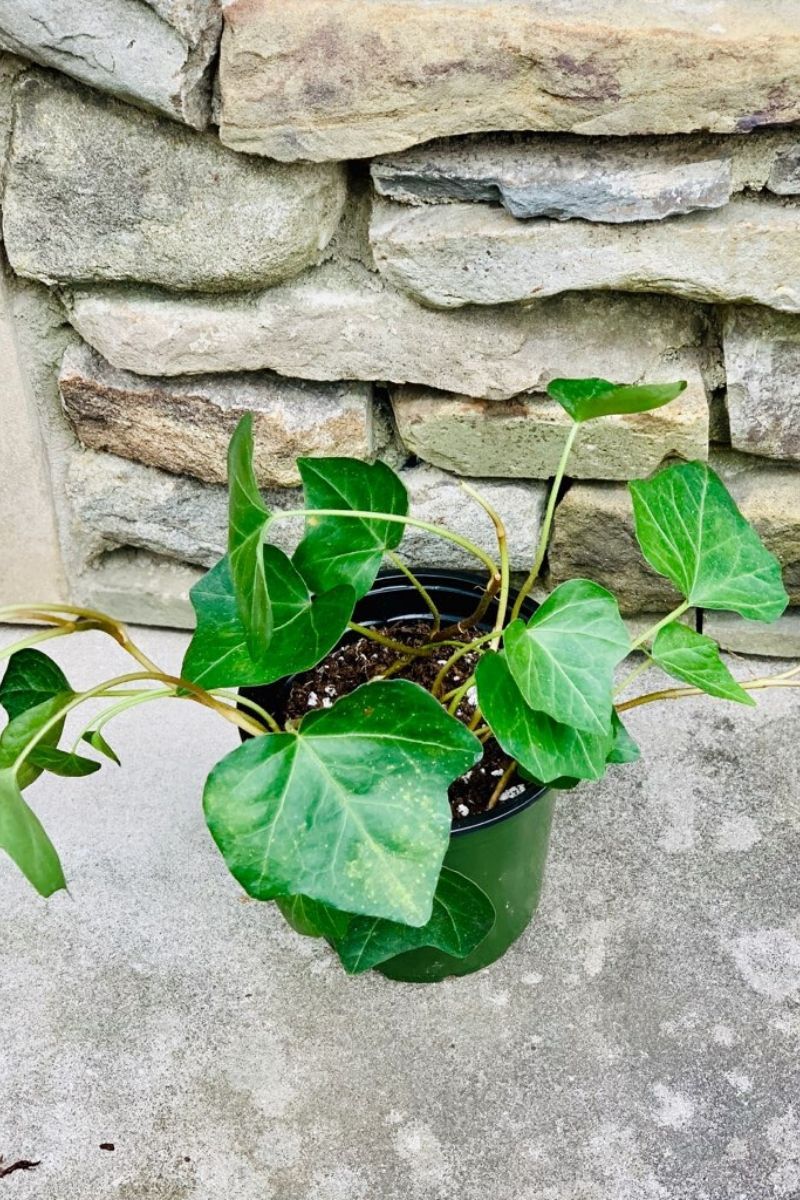
If you like ivies but are a bit tired of English ivy, this species will be a welcome change. With large, three-lobed leaves and wine-red leafstalks and stems, the Algerian ivy has a coarser texture and exhibits more vigorous growth. In the American Southwest, it is used as a heat-resistant ground cover, much the way outdoor varieties of English ivy are used in our region. In the Chicago area, Algerian ivy can be used as a patio plant in the warm months, but must be brought indoors for the winter. A native of North Africa, the Azores, and the Canary Islands, this species is not tolerant of frosts. One striking variegated variety, `Gloire de Marengo', is especially popular. |
How to Care for Your Plant:
LIGHT: Direct sunlight to bright indirect sunlight is best.
WATERING: Make sure the soil surface dries between waterings. When the soil surface is dry to the touch, water the plant thoroughly. At least a little water should come out of the pot's bottom drainage holes, but the plant should not stand in saucer water for more than thirty minutes. One warning: when healthy, Algerian Ivy tends to use up soil moisture quickly. If your plant begins to droop due to parched soil, water at once. In most cases it will recover quickly.
FEEDING: Feed your ivy only when it is actively growing and even then sparingly. At that point, use a balanced all purpose houseplant fertilizer at half the frequency and concentration listed in the product directions. Algerian ivy prefers neutral to slightly alkaline soil--so do not use a high-nitrogen acidifying fertilizer.
SPECIAL CONSIDERATIONS: Continually waterlogged soil may result in root rot, which in turn can kill your plant rapidly. Overfertilizing will promote the growth of weak foliage especially susceptible to spider mites. Use systemic granules in your plant's soil to deter these troublesome pests.
Comments
0 comments
Please sign in to leave a comment.