
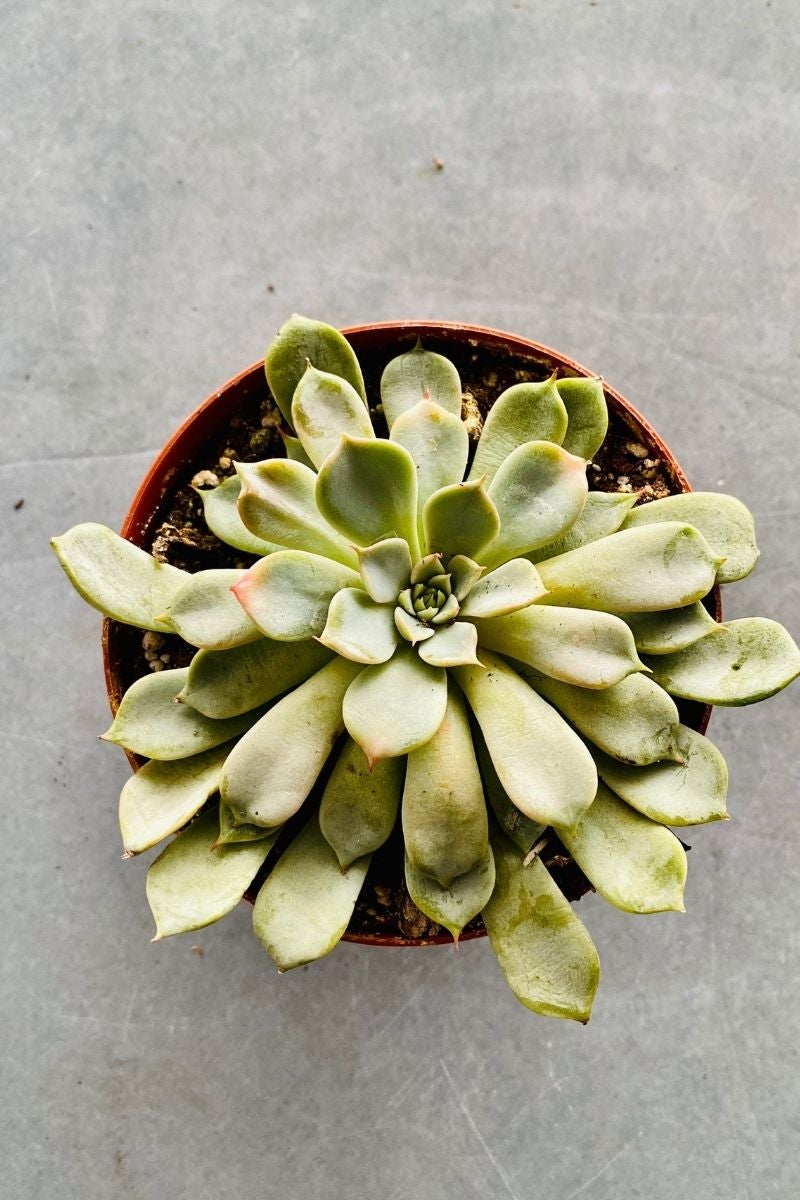
Taxonomic Name: Echeveria
Orpine Family
Succulent Plant
Echeverias are low-growing relatives of the well-known jade plant. They form rosettes of tightly whorled, succulent leaves, and, if they're happy, the put forth spikes of small and often very colorful flowers. While they aren't cacti, they do have specially adapted, water-retaining tissue. Echeverias make particularly good specimens for the beginning succulent collector, because they are hardy indoors, as long as they get ample light and are not overwatered.
How to Care for Your Plant:
LIGHT: A few hours of direct sunlight each day are ideal; so placement in an unobstructed western, eastern, or southern window is best. Echeverias will not survive, at least not in the long run, in windowless, artificially lit interiors.
WATERING: Make sure the plant's soil becomes entirely dry between waterings; but when the time does come to water, do so thoroughly. At least a little water should come out of the pot's bottom drainage holes, but the plant should not stand in saucer water for more than ten minutes.
FEEDING: Feed sparingly, and only during active growth or flowering. Use a cactus food at half the concentration and frequency listed in the product directions.
POTENTIAL PROBLEMS: If overwatered, echeverias can develop root and stem rot. Also, check periodically for scale and mealy bug insects. Warning: some insecticidal sprays may harm the plant's succulent leaf tissue. Consider using fine horticultural (paraffin-based) oil to control these pests.
Comments
0 comments
Please sign in to leave a comment.