
 |
Taxonomic Name: Platycerium Bifurcatum
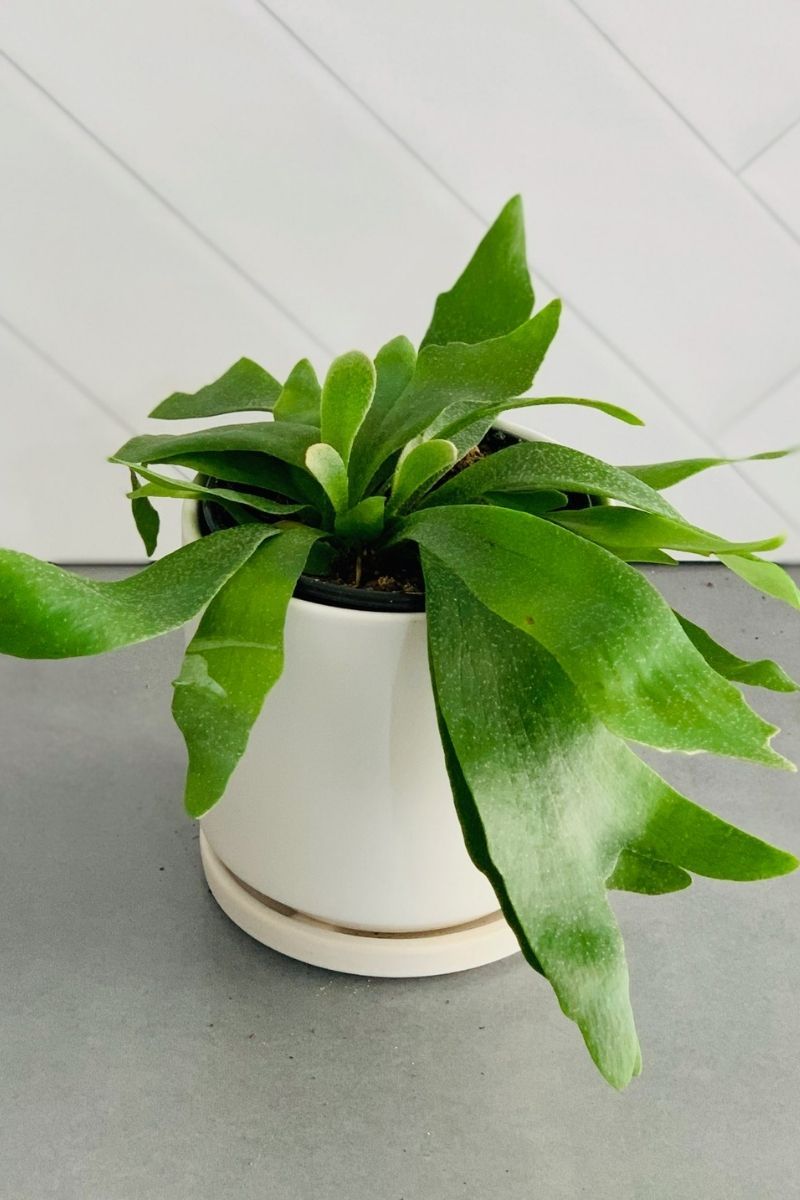
Polypody Fern Family In tropical and subtropical regions, many different types of plants--everything from ferns to cacti and bromeliads--have learned to grow not at ground level but perched instead on the branches of lofty trees, where sunlight and even water is more plentiful. Such plants are called epiphytes. The best-known epiphyte fern is the staghorn fern, a whimsical conversation piece that lives up to its name by resembling stag's antlers. As a general rule, mature staghorn ferns are happiest when they are mounted on a layer of sphagnum moss attached to tree bark or wooden slabs. As your plant grows, you will notice that it produces two types of leaves: the long "antlers" and kidney-shaped fronds that clasp the plant's base. Do not remove the latter when they turn brown. They die quite quickly and become part of the plant's spongy water-absorption organ. |
How to Care for Your Plant:
LIGHT: Bright indirect sunlight is best. Blazing, direct sunlight may burn the foliage, and low light levels may cause your plant to languish in the long run.
WATERING: If your staghorn fern is mounted on bark or wood, drench both the plant its backing whenever the backing is dry. If your plant is potted, water when the soil surface becomes dry to the touch. At least a little water should come out of the pot's bottom drainage holes, but the plant should not stand in saucer water for more than thirty minutes.
FEEDING: Do not feed your staghorn fern. It gets the nutrients it needs from the gradual chemical breakdown of its old, withered basal leaves--an excellent example of natural recycling!
SPECIAL CONSIDERATIONS: Like almost all ferns, staghorn ferns require high humidity. They grow the best and survive the longest in a greenhouse or conservatory setting.
Comments
0 comments
Please sign in to leave a comment.