
E = Easy, forgiving, a child could grow
M = Moderate, at least one growing factor (humidity, temps, watering, etc.) that requires
consideration beyond the normal home environment
C = Challenging (multiple requirements to meet for success) OR naturally short-lived because
it’s an “annual” or flowering seasonal plant.
PF = Pollution fighter! On NASA’s list of best plants for removing household toxins from the
air!
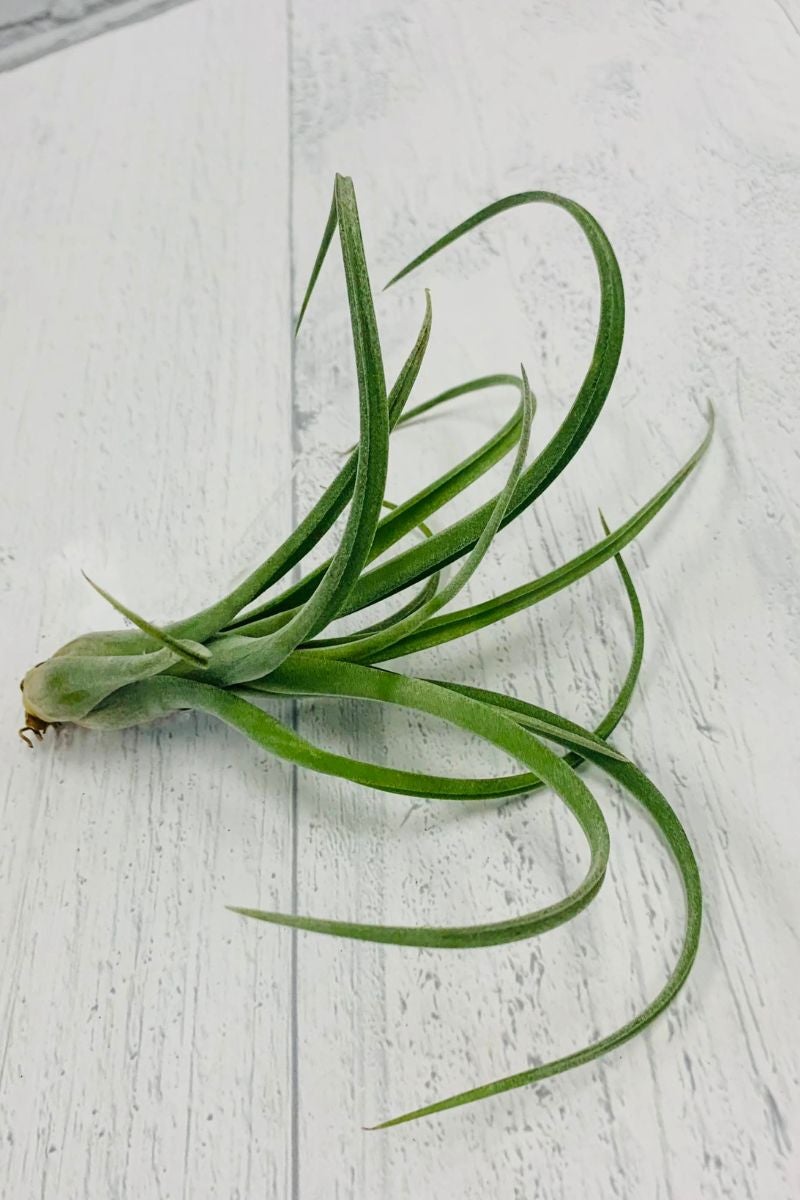
Tillandsia (Air Plant) – E
Customer benefits: Wide range of sizes, colors, flowers, forms and uses!
Versatility of the air plants is unmatched - Can be hung, mounted as a wall hanger, placed in
vertical walls, or even laid “unpotted” on a surface.
Light: Best in bright or indirect light
Water: Can be misted multiple times per week; sprayed thoroughly in the sink and allowed to
drain; or soaked in water for 15-20 minutes, then allowed to drain before replacing in its home
situation.
Customer tip: May or may not have conspicuously colored bracts (actually modified leaves on a
stem) that might be confused as flowers. The flowers emerge from the bracts. They are related to bromeliads, so
once the parent plant flower fades, the plant will start producing offshoots, which are the next
generation. The parent plant will not flower again.

Kalanchoe – M
Customer benefits: As flowering plants go this one is relatively easy as it’s a succulent and may
rebloom. Good color range of rose-pink, scarlet, orange, yellow and white.
Light: Some direct sun, minimally very bright light.
Water: Definitely allow soil surface to dry well before watering again. Be diligent about pouring
off excess drainage water.
Customer tip: If deadheaded well after flowering and given enough light the plant may
reflower, although with lighter, more sporadic coverage than bloom initially on when the plant
was purchased.
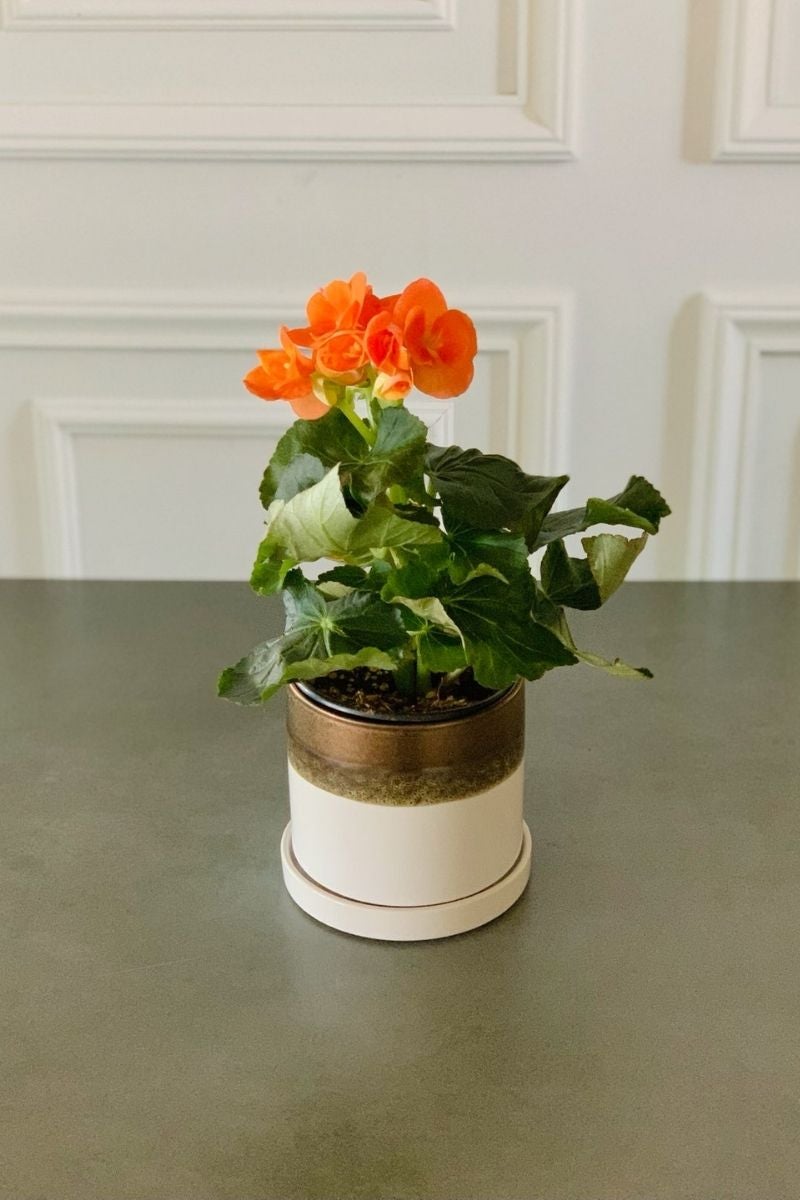
Rieger begonia – M/C
Customer benefits: Wide range of colors (pink, scarlet, orange, yellow and white), attractive
shiny leaves.
Can have long season of bloom.
Light: Brightest indirect light you can give them. During lower light of late fall/winter direct sun
would be fine.
Water: Certainly allow soil surface to dry between waterings.
Customer tip: Make sure plants are spaced and given good air circulation to prevent powdery
mildew.
Be meticulous about deadheading as soon as flowers start discoloring.
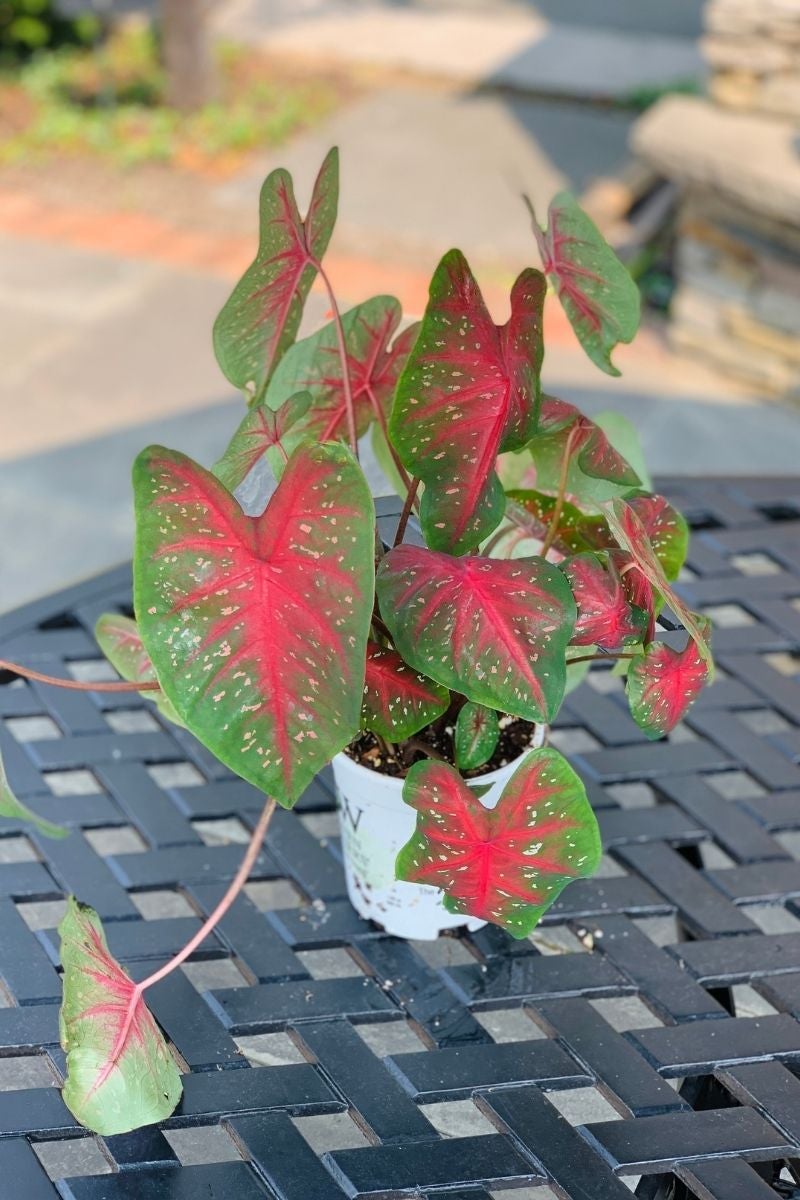
Caladium– C
Customer benefits: This is challenging as a houseplant unless you have a warm, bright, humid
“greenhouse-y” room. They’re really in our greenhouse as a stopover until they can go outside.
They HATE cold and wet!!!
Grown for their strikingly colored tropical elephant-ear like leaves.
When flowers occur, you’ll cut them off as you see them emerging. Not an attractive feature.
Thrive in shade, heat and humidity in the summer garden.
Customer tip: This is grown from a corm that can be lifted and stored over the winter, but for
most people they’re so inexpensive it’s probably smartest to treat them as a one growing
season annual.

English Ivy - E/M, PF
Customer benefits: Lovely in its own pot or hanging container, or as part of a combo planter.
Attractive star-pointed leaves of green, or with yellow, gold or cream - edged variegation.
Great air scrubber – Removes: benzene, formaldehyde, trichloroethylene and xylene from your
home.
Easy to grow.
Light: Low to bright, indirect. Variegated leaf forms prefer stronger light to intensify the
coloration.
Water: Allow the soil surface to dry before watering again.
Customer tip: They can be bothered by spider mites. Taking the plant to the sink once a month
or so and washing down the leaves thoroughly should help minimize s.m. problems.

Phalaenopsis orchid (Moth Orchid) – E
Customer benefits: Elegant and long, long-lasting flowering houseplant.
Leathery, dark green basal leaves throw long arching spikes of flowers arranged in a linear
fashion.
These days the base colors and overlay combinations of flower spotting and streaking are
astonishing and often exotic.
Light: Moderate to bright, but indirect. Direct sun is not recommended.
Watering: Water lightly until water starts draining from the pot. Never saturate the bark to the
point where the pot feels heavy. If in a saucer pour excess water off after no more than 30
minutes!
Customer tip: After the last flower fades at the end the flower spike (stem) can often be cut
back to just above the second or third node to try to induce a secondary, smaller flower spike to
appear. Sometimes it works, sometimes it doesn’t.

African violet - E
Customer benefits: A reliable reblooming houseplant that doesn’t require a lot of space.
Color range, flower size and flower power have changed dramatically for the better since
Grandmother’s day!
Light: Bright, indirect. In winter, east direct light should be fine.
Watering: When the soil surface feels dry to the touch use warm water applied directly to the
soil surface until it drains freely out of the bottom of the pot.
Be careful to not use cold water and to keep water off the leaves as much as possible,
regardless of its temperature. It can cause permanent discoloration.
When in active growth use a high phosphorous fertilizer to promote bloom!
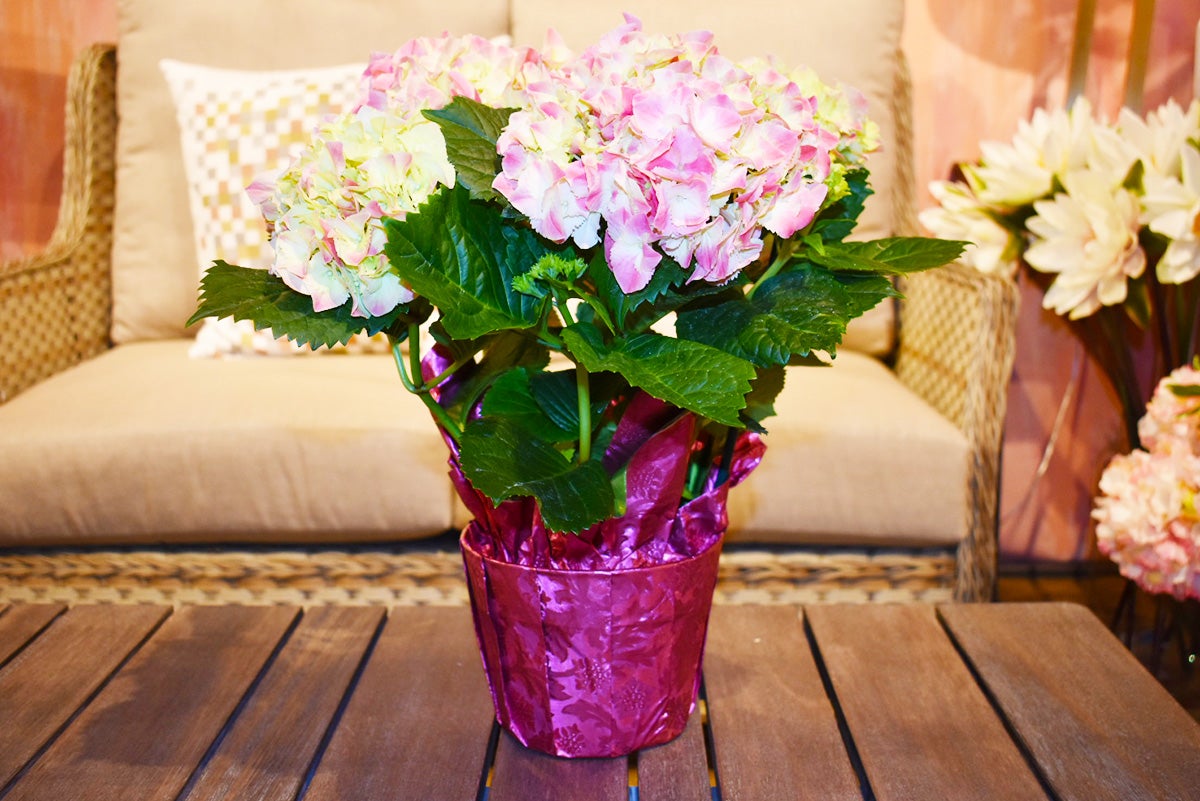
Florist Hydrangea - E
Customer benefits: Great, long-lasting (for a seasonal flowering) plant festooned with softball size heads of white, pink, blue and purple.
Foliage is thick and dark green.
Light: Keep cool and out of direct sun to maximize flower longevity.
Watering: Keep constantly moist. It would be difficult to overwater this plant when it’s in full
bloom.
Customer tips: The varieties sold as “in bloom” holiday gift plants should be discarded after
flowering. They are typically not garden hardy varieties. Even if they were planted outdoors and
survived winter the chances of them blooming again are slim to none.

Echeveria - E
Customer benefits: Think of these as the tropical version of Hen & Chicks.
There are lots of varieties (including color shading) to recommend them.
These would be good starter plants for young children as they’re hardy and forgiving.
When mature will provide small yellow or orange flowers on arching stems.
Light: These will perform best in the brightest light, most direct sun siting that you can provide.
Water: Infrequently (they’re after all succulents that store water in their leaves).
Customer tips: Especially in winter dormancy they can go for weeks without water!
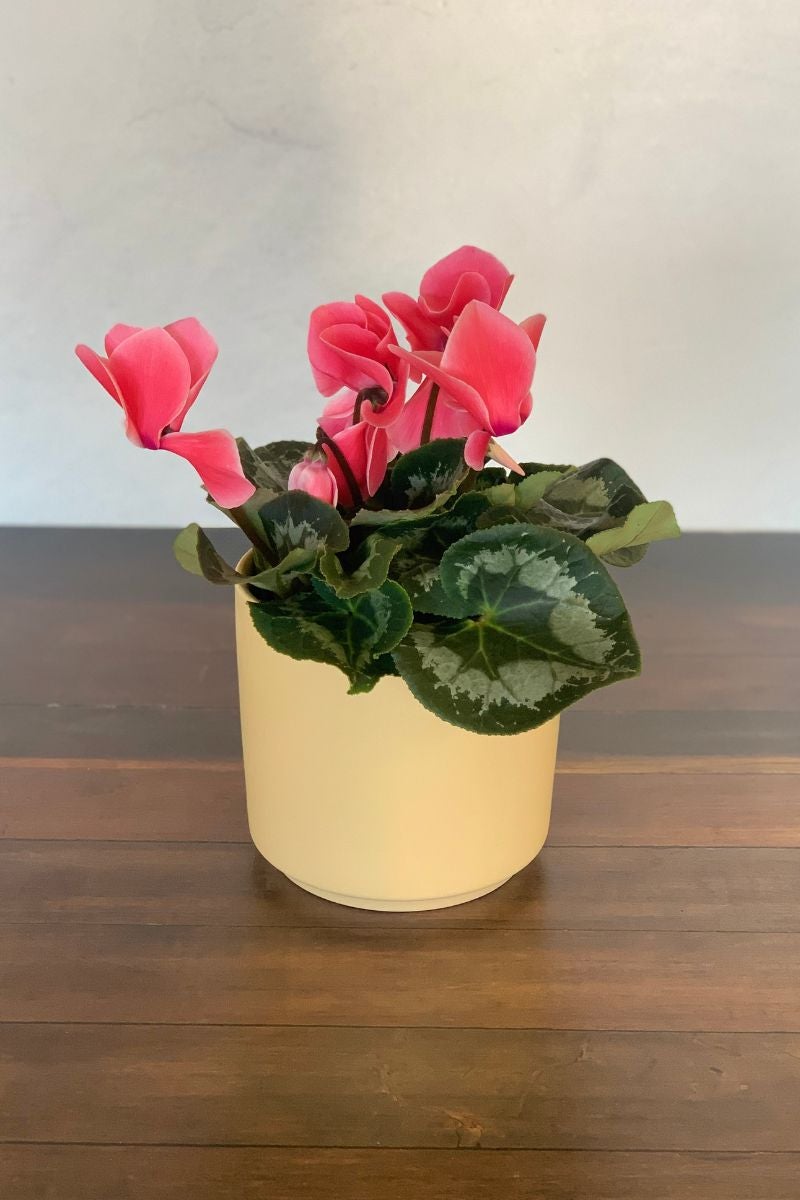
Cyclamen - C
Customer benefits: A choice flowering plant for those who keep their homes cool/cold.
The heart-shaped leaves are usually white or silver-veined, or edged in the same color as the
venation.
The (red, pink, rose, fuchsia, white) flowers float well above the foliage so they always make a
nice display.
Light: Bright, indirect light. Never a sunny south or west window, even in the winter!
Water: This is a bulbous plant with an indented center. While keeping it evenly moist, try to
water your plant around the edges without pouring lots of water into the center.
Customer tip: Cyclamens are generally a short-term gift plant. Short-term in that they like room
temps 60 degrees (even below that is fine) with relatively high humidity – not a common
combination in American homes today.
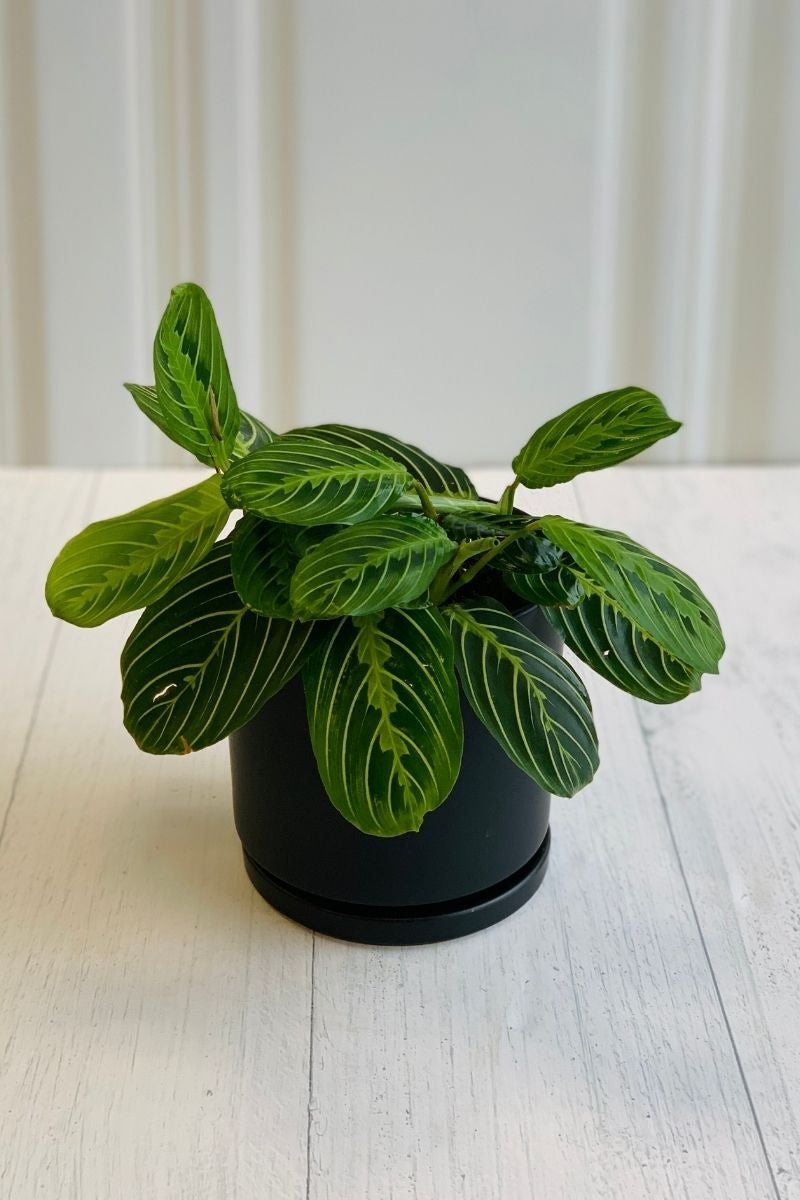
Calathea (Prayer plant, Peacock plant and many more common names) – M
Customer benefits: Elegant little plants with variously colored striped foliage. Often the leaf
undersides will be a contrasting color!
Light: Medium to bright, certainly not a sunny summer south or west window. Enough light is
needed however to intensify the color of the leaves.
Water: Evenly moist, only allowing soil surface to dry slightly before watering.
Customer tips: If not kept evenly moist, and/or are grown in dry air, or are watered with highly
fluoridated water leaf tips and edges may start showing brown, dead edges.
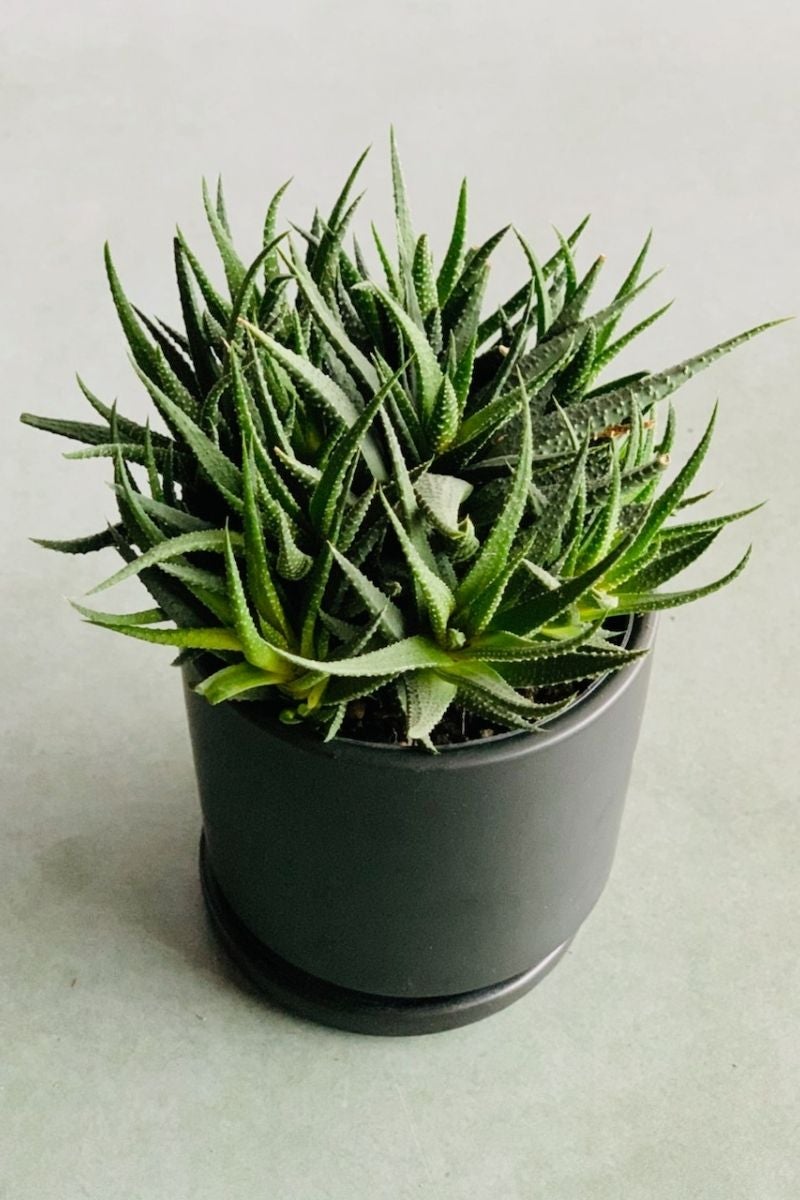
Haworthia (Big genus with lots of members) - E
Customer benefits: Another group of succulents, so low maintenance.
Pretty, interesting star-rosetted plants, many with raised silver or green markings on the leaves.
With age and pot-bound status may produce small dangling, bell-like flowers as a bonus.
Light: This group tolerates the lowest light levels of the major succulent groups, although it
would prefer bright light.
Water: Allow the soil to dry very thoroughly between waterings even during the spring/summer
growing season. Like most succulents it should be kept even drier during winter dormancy
when day length and light intensity are reduced.

Chrysanthemum – C (only because it’s a flowering pot plant), PF
Customer benefits: Mums were #1 on NASA’s pollution fighting houseplant list- removing:
ammonia, benzene, formaldehyde, trichloroethylene and xylene!!!
And they provide beautiful, long-lasting flowers in a wide range of colors and flower shapes.
Light: Customers are buying a budded or blooming plant so it’s not an ongoing relationship.
They can put it in bright indirect light to keep it from finishing faster than in a hot south or west
window.
Water: When the soil surface has been dry a day or so.
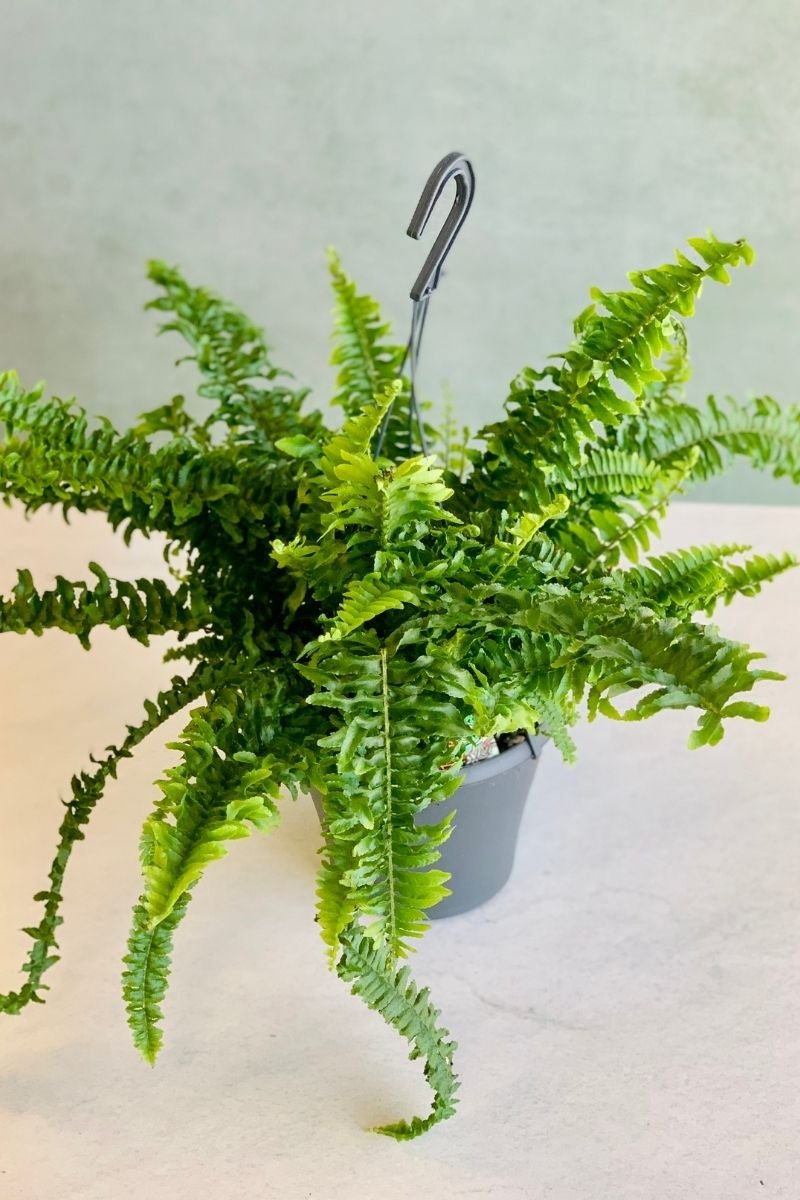
Boston Fern – M/C, PF
Customer benefits: In addition to its elegant arching green fronds this is another top notch air
scrubber removing formaldehyde and xylene.
Light: Will tolerate lower light, but will shed more than if sited in morning sun, or bright light for
at least half a day.
Water: With all those soft leaves, this plants needs to be kept evenly moist (even one major
“drying out” event can be disastrous and really set the plant back).
Customer tip: Providing high humidity during winter heating season is very beneficial.
Bathrooms with lots of moisture from showers are a great way to address low humidity for
plants!
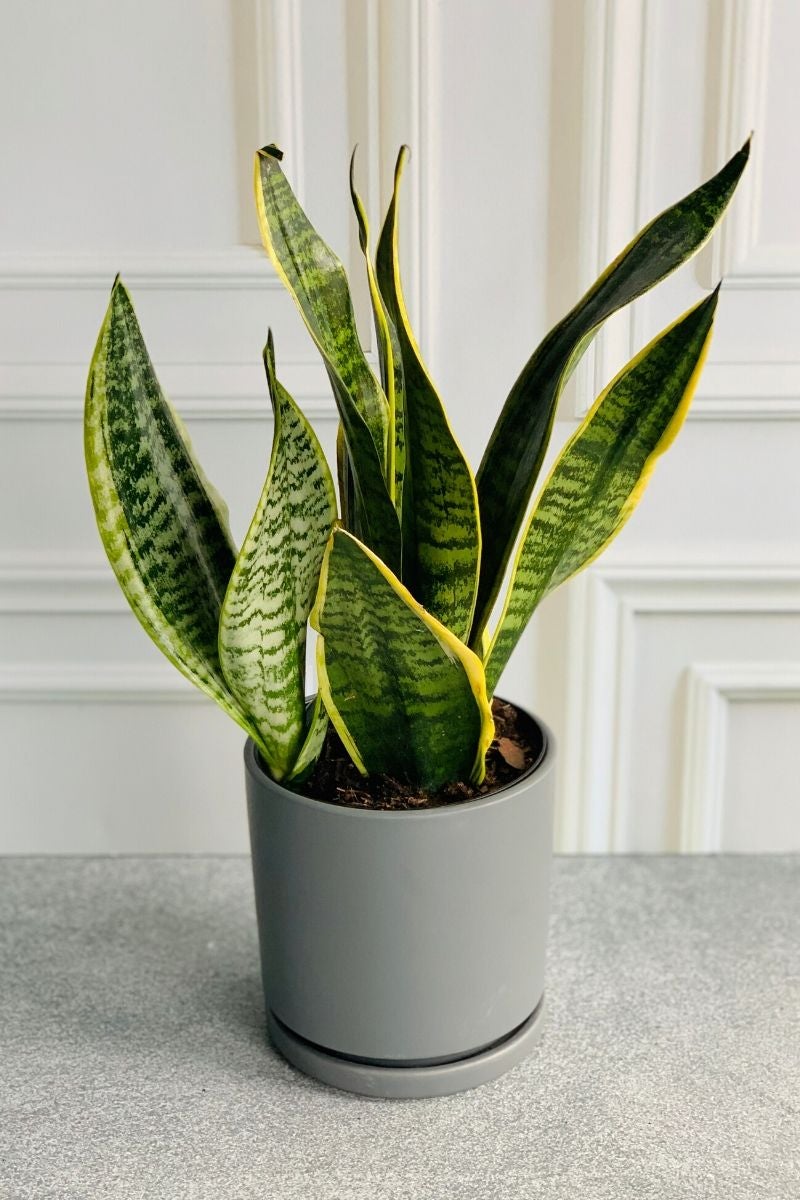
Sansevieria – (Snake Plant, Mother-in-Law’s Tongue) E, PF
Customer benefits: This is a big genus with tall upright forms as well as short, squat rosette
forms.
Not only are they as forgiving of neglect as succulents, the variegated (S. trifasciata ‘Laurentii’)
form is on NASA’s list of indoor pollution fighters removing: benzene, formaldehyde,
trichloroethylene and xylene.
All of the Sansevierias are easy. These would be great recommendations for people that are
starting out in houseplants or say, “I have a black thumb.”
Light: They tolerate low, low light to quite bright light.
Water: Direct correlation between the low light and infrequent watering. The more light, the
more frequently they can be watered. Still, think of them as camels and water when you think
of it. If you’re not sure it’s always better to wait a few days to water.

Peace Lily (Spathiphyllum) E, PF
Customer benefits: This is another GREAT NASA-listed air pollution scrubber removing all of the
big 5: ammonia, benzene, formaldehyde, trichloroethylene and xylene.
This a really a beautiful, graceful plant with elongated, shiny dark green leaves on long
individual stems.
There’s a potential flower that isn’t technically a flower. The white sail-like “flower” is actually a
spathe, or modified leaf. Customers don’t care, call it a flower. It is held well above the leaves
and makes a nice long-lasting color bonus.
Light: Tolerates low light (like a north window) but is more likely to bloom in bright, but indirect
light (say, off to the side of a west window).
Water: Best if kept evenly moist. In other words, as soon as the surface feels dry for a day or so
it’s probably time to water.
Customer tip: If you consistently underwater the leaves will develop brown tips.

Pilea – E/M
Customer benefits: This is another large genus of small/medium-sized plants that lend
themselves to fairy and dish garden work, as well as terrariums.
While they often have interesting textures and leaf variegation, their smaller size keeps them
from being widely used as specimen plants.
Light: Generally, Pileas can safely be in bright light, but never direct sun – especially if in a
terrarium! Need to check on light needs on an individual basis per the species in question.
Water: While evenly moist should be a safe recommendation the really succulent-stemmed
species should be allowed to dry between watering. Must be particularly careful in high
humidity situations like terrariums where they can turn to “mush”.
Heather – C
Customer benefits: This is a perfect flowering gift plant for those with a cold sunporch or
greenhouse window. 60 degrees and under day and night will provide longest life. A hotter,
dryer environment means shortened life expectancy.
This is a challenging plant not only because it’s a short-term proposition flowering plant, but its
temperature and moisture needs are narrow and hard-to-meet in American homes.
Light: Bright light to direct sun would be best (the latter only if the room is COLD!)
Water: Keep evenly moist. Soft water would be best as these are acid –loving.
Customer tip: If you see a customer carrying a Heather to the cashiers make sure they
understand how important COLD, not just cool, is to the longest life of this plant. If they have a
70 degree home steer them toward another choice so they’re successful.
From NASA Guide to Air-Filtering Houseplants - Origins of 5 Common Indoor Air Pollutants:
Ammonia – Window cleaners, floor waxes
Benzene – Found in plastics, synthetic fibers, dyes, detergents, drugs, tobacco smoke, glue,
paint and furniture wax
Formaldehyde – Paperbags, waxed paper, facial tissue and paper towels, napkins, particle
board, plywood and synthetic fabrics
Trichloroethylene – Printing inks, paints, lacquers, varnishes, adhesives and paint
remover/stripper
Xylene – Printing, rubber, leather, paint and tobacco smoke
T.T.F. – April 2018
Comments
0 comments
Please sign in to leave a comment.